Skip to content

Tutorials

Build your own JMeter Docker Image and execute your Performance Test

If you'd like to run load tests in a simple way, and possibly share them, while benefiting from a simplified configuration, with a focus on writing your test plan, and its test typology, this article is for you!

Docker offers virtualization services that simplify the replication of working environments.

Furthermore, each virtualized service is isolated from unrelated services on other containers or the host machine, ensuring portability across host machines and the network.

Using JMeter within a Docker container offers several advantages :

Portability :

Docker enables the creation of lightweight and portable containers that can run on any Docker-compatible system, whether it's Linux, macOS, or Windows. This simplifies the deployment and management of JMeter, avoiding compatibility issues related to different system configurations.

Isolation :

Docker containers provide an isolated environment for running applications, meaning JMeter's dependencies and runtime environment are encapsulated within the container. This reduces potential conflicts with other applications or system components.

Ease of deployment :

With Docker, distributing and deploying JMeter across multiple machines or environments is straightforward.

You can create a Docker image containing JMeter and distribute it to your team or various test environments, streamlining the deployment process.

Version management :

By using Docker, you can version your Docker images containing JMeter, facilitating the management of different versions of JMeter used in your tests. You can also share these images via public or private Docker registries

Use JMeter to create a website crawler

The idea behind this blog post originated when we updated our documentation after the release of our new UI. We had to identify all links used in the OctoPerf website and update them from https://doc.octoperf.com to https://api.octoperf.com/doc. With more than 250 blog posts at the time I'm writing this one, you can see how this could prove challenging. And of course the twist is that we also took this opportunity to reorganize the documentation so it's not as simple as a search and replace of the domain.

This got us thinking on ways to automate it, because a lot of third party links could also be broken and of course one of those ways is to use OctoPerf itself to execute JMeter tests that will report on all the broken links.

Analyze your load tests

OctoPerf's report engine provides many graphs to sort and presents test metrics in a comprehensive way. We've tried to improve it over the years so that you can access critical information very quickly. But requirements vary from one project to the other.

In this post we will look at how you can configure the report to show your preferred metrics, and also all the shortcuts you can take to achieve this goal.

The best example is the Report summary, it allows you to navigate between all the items in a few clicks:

report-summary

Importing Postman requests to Octoperf

You may have spent a considerable amount of time configuring Postman requests for your in-house API tests, and you wish to use them without having to create them again from scratch on Octoperf.

That's one of the many situations where Octoperf's compatibility with Jmeter is going to come in a handy.

Warning

A new and faster way to import Postman Collections has been implemented in Octoperf.

You can find more information here.

Postman to Jmeter

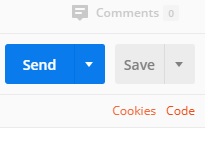
The first step will be to convert your requests into a JMeter-friendly format, using Postman Code Generation Snippet :

savecode

Test mobile native applications with OctoPerf

As mobility has been the trend these past years, all the users coming to a website do so from many different devices. OctoPerf allows you to simulate traffic to your website, but it also allows to simulate this kind of multi-device traffic.

That being said, to take advantage of OctoPerf possibilities, you might need to import several different user journeys. Because a mobile user is very likely to deal with a different version of the application. Thus if you record only one user journey from a computer's browser and use it for your tests, they may not be realistic.

Browser based mobile apps

To record the traffic from a mobile application, you have several options. For browser based apps, you can record them from Chrome or firefox and just use the dev tools to switch the user agent:

Native apps are a bit more complex to get by.

Let's see what is required step by step to record such an application.